 SAKER
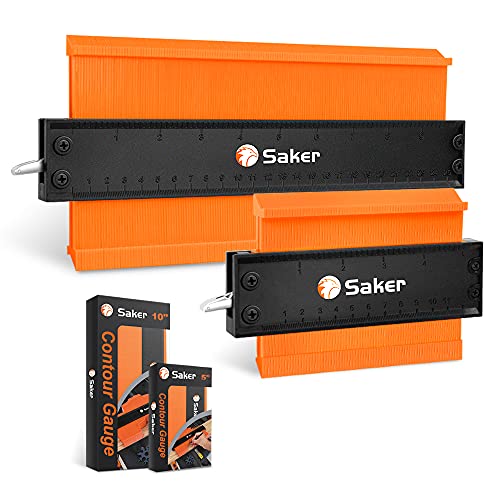
Contour Gauge Pair, 10-Inch and 5-Inch
Two gauges in two lengths to press against baseboard trim, copper supply lines, or wheel arches and transfer the line to your stock.
$29.994.6 out of 5 8,120 ratings
Odd corners and old moldings rarely follow a true right angle. We build this gauge to take the guess out of an irregular cut before you touch a saw. Press the pins into the contour, flip the clamp, and carry the outline over to your board.
Price and stock live with the storefront and can move between visits.
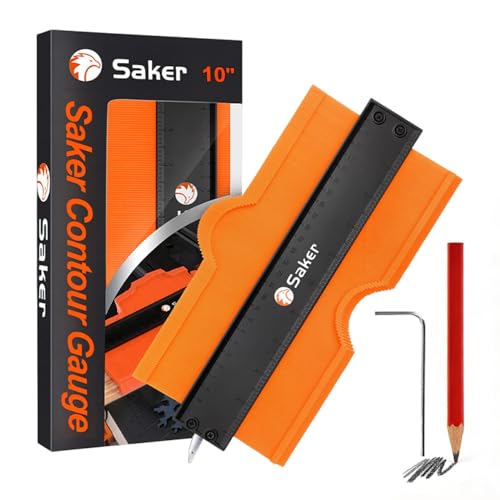
The side lever binds the pins together once you push them against a molding or a heating pipe. It holds the shape firm while you move the gauge to the bench and run a carpenter pencil along the profile.
The frame lets you tighten or slacken how stiffly the teeth slide. If the pins push too stiffly around soft drywall or loosen up after repeated passes on rough brick, you can set the friction right back where you want it.
We mold the sliding pins from smooth plastic so they will not rust in a damp basement or leave marks across finished baseboards. The teeth stay straight enough to trace tight curves around radiator lines and odd wall corners.
You still need to bring a sharp pencil and your own saw to the stock. The gauge simply saves you from cutting cardboard templates over and over while you try to match a crooked door frame.
| Tool shelf | Measuring and marking |
|---|---|
| Where it works | At the workbench, Around the house |
| Size | 10 in |
Payment, delivery and returns run at the storefront, under its own rules.
Two gauges in two lengths to press against baseboard trim, copper supply lines, or wheel arches and transfer the line to your stock.
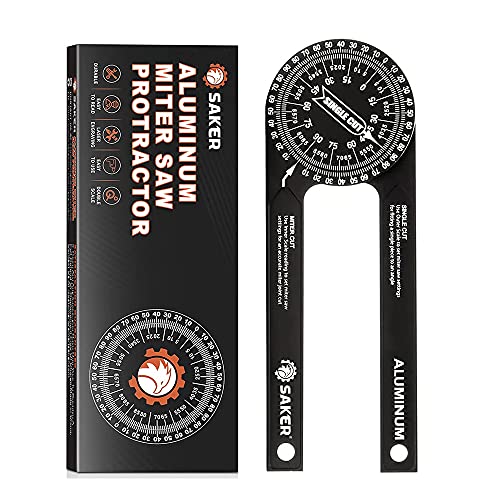
An aluminum dial that takes the guesswork out of trim cuts by reading corner angles and showing the exact miter saw setting.
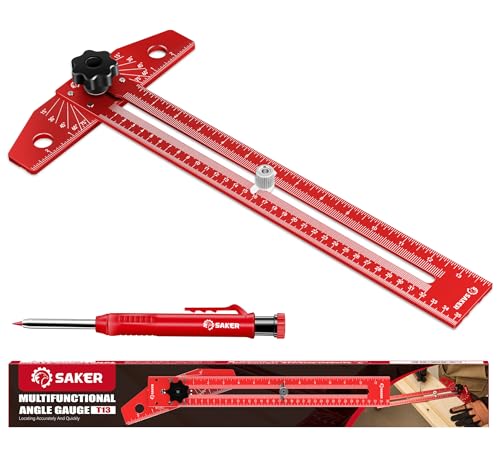
An aluminum rule and protractor head that locks down with a thumb nut for laying out lines, finding angles, and setting saw bevels across the bench.
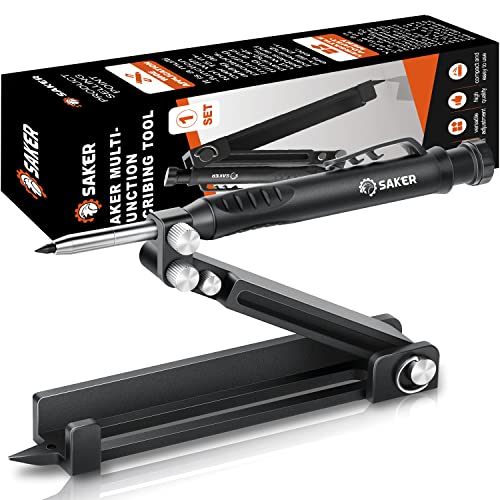
Mark uneven walls, scribe parallel lines, and trace tight arcs using an aluminum body that clips straight to your belt or pocket.
A row of flat plastic teeth that presses against door casings, pipe curves, and uneven baseboards to lock the profile for a pencil trace.