 SAKER
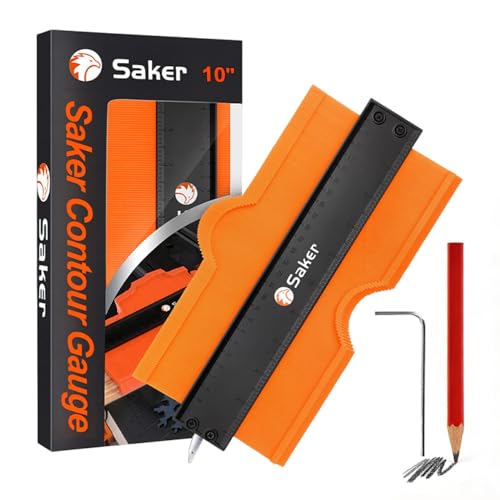
Contour Gauge 10-Inch with Lock
A row of flat plastic teeth that presses against door casings, pipe curves, and uneven baseboards to lock the profile for a pencil trace.
$19.994.6 out of 5 22,735 ratings
Corners in an old room rarely sit square. We machine this tool from solid aluminum so you can press the arms against drywall or baseboard and carry the true angle over to the chop saw bench without pencil math. It fits into a tool apron pocket when you climb the ladder.
Price and stock live with the storefront and can move between visits.
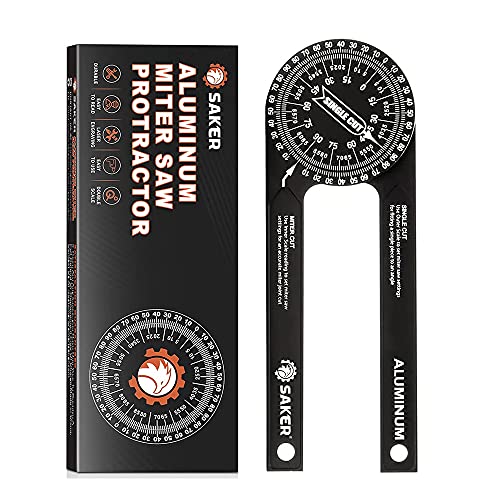
The laser engraved scales give you the number to set on the saw table. One arrow reads the single cut angle and the other shows the miter setting for trim joints.
We cut the body from aluminum alloy so the edges stay straight when dropped on a concrete floor. It resists shop moisture and will not warp like plastic gauges.
The center pivot swings open for outer casing edges and closes tight for inside corners. The rounded shape lets the flat edges seat flat against uneven sheetrock seams.
Crown molding, baseboard runs, and odd deck framing angles all transfer straight to the blade. You still need your own pencil and a flat scrap piece for your test cut.
| Tool shelf | Measuring and marking |
|---|---|
| Where it works | At the workbench, Around the house |
| Size | 7 in |
Payment, delivery and returns run at the storefront, under its own rules.
A row of flat plastic teeth that presses against door casings, pipe curves, and uneven baseboards to lock the profile for a pencil trace.
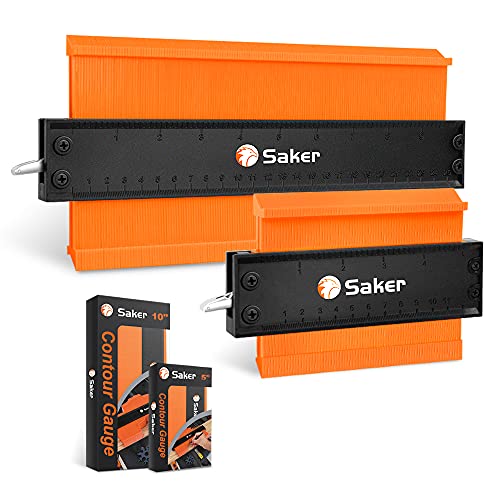
Two gauges in two lengths to press against baseboard trim, copper supply lines, or wheel arches and transfer the line to your stock.
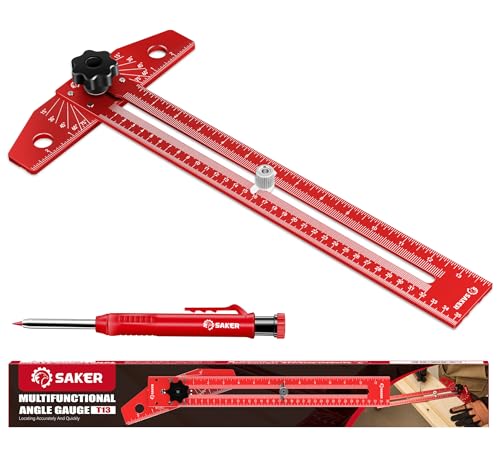
An aluminum rule and protractor head that locks down with a thumb nut for laying out lines, finding angles, and setting saw bevels across the bench.
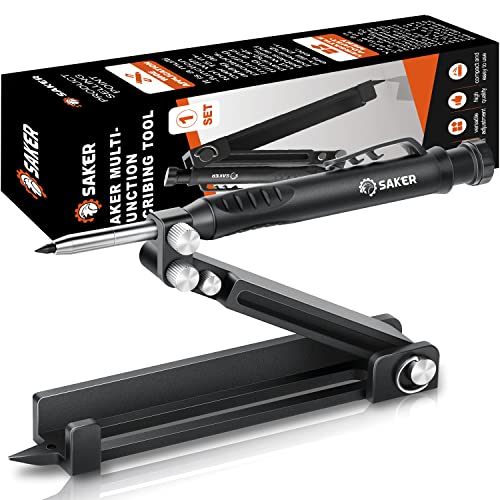
Mark uneven walls, scribe parallel lines, and trace tight arcs using an aluminum body that clips straight to your belt or pocket.
An aluminum dial that takes the guesswork out of trim cuts by reading corner angles and showing the exact miter saw setting.