 SAKER
SAKER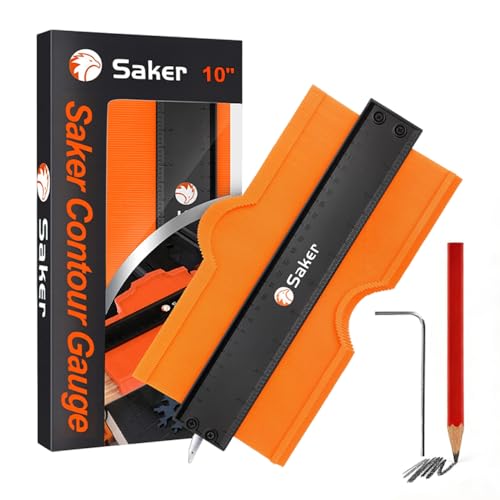
Contour Gauge 10-Inch with Lock
A row of flat plastic teeth that presses against door casings, pipe curves, and uneven baseboards to lock the profile for a pencil trace.
$19.994.6 out of 5 22,735 ratings
Setting a saw bevel or running parallel lines down a rough board takes more than an old tape measure. We built this scriber with an aluminum alloy body and a locking head so you can read an angle and strike your mark in one pass. It sits flat on the stock and stays put while you trace.
Price and stock live with the storefront and can move between visits.
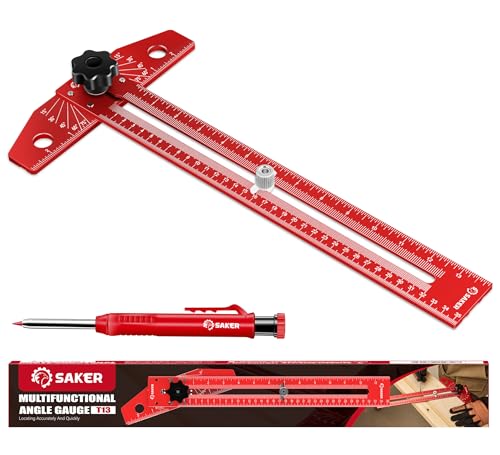
We machine the main bar from aluminum alloy so it resists bending when it drops on the concrete floor. The surface takes shop dust and handling without losing its flat edge against your lumber.
Loosen the brass nut, swing the blade to the angle you need, and clamp it tight. It holds firm for repeating identical cuts on rafters, miter joints, or corner braces without drifting between boards.
The scales and degree marks are cut directly into the metal rather than printed on top. They stay sharp to read under dim garage lights and will not rub away when sliding against rough sawn pine.
We put a mechanical pencil and extra leads in the box so you can start laying out lines right away. The thin lead fits into the guide points along the blade for clean, uniform scribes.
| Tool shelf | Measuring and marking |
|---|---|
| Where it works | At the workbench |
Payment, delivery and returns run at the storefront, under its own rules.
A row of flat plastic teeth that presses against door casings, pipe curves, and uneven baseboards to lock the profile for a pencil trace.
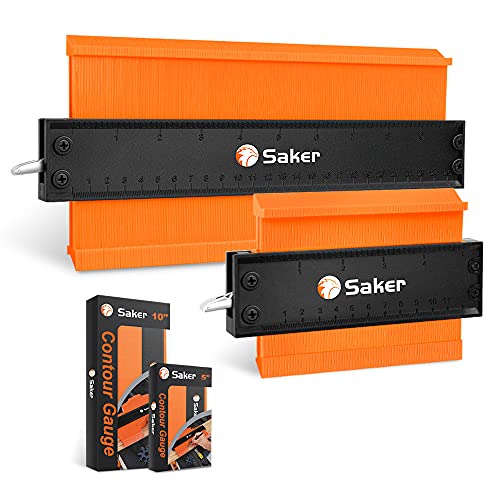
Two gauges in two lengths to press against baseboard trim, copper supply lines, or wheel arches and transfer the line to your stock.
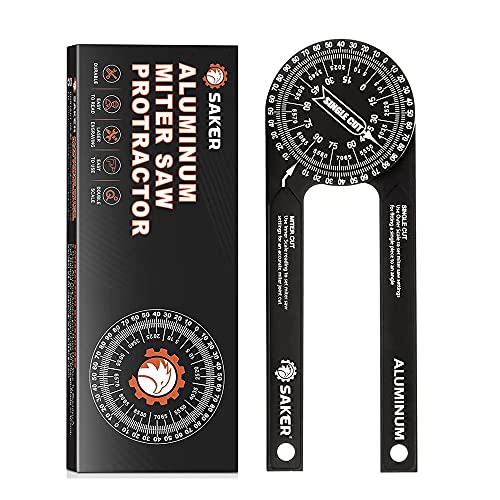
An aluminum dial that takes the guesswork out of trim cuts by reading corner angles and showing the exact miter saw setting.
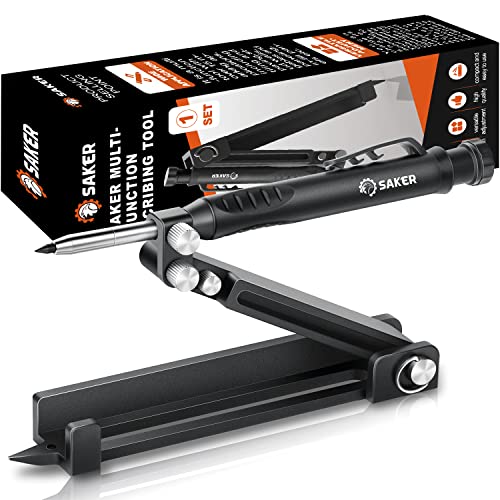
Mark uneven walls, scribe parallel lines, and trace tight arcs using an aluminum body that clips straight to your belt or pocket.
An aluminum rule and protractor head that locks down with a thumb nut for laying out lines, finding angles, and setting saw bevels across the bench.