 SAKER

Contour Gauge 10-Inch with Lock
A row of flat plastic teeth that presses against door casings, pipe curves, and uneven baseboards to lock the profile for a pencil trace.
$19.994.6 out of 5 22,735 ratings
Coping an odd trim profile or scribing around a heating pipe usually eats scrap wood before you get it right. We build this gauge with rows of plastic teeth that slide against the molding, lock tight with a side lever, and hold the pattern while you walk over to the bench.
Price and stock live with the storefront and can move between visits.
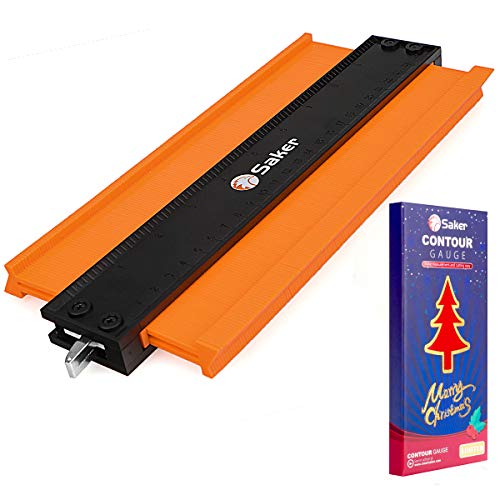
The side lever binds the teeth so they do not shift when you lift the frame away from the wall. You can adjust the tension screw if the pins feel too loose after repeated scribing.
The thin plastic teeth push around door casings, stair risers, copper pipes, and metal fenders. You get the real shape of the obstruction instead of guessing with a tape measure.
We use molded teeth that will not rust when sitting in a damp basement or rolling around in an unheated garage box. The body stays light enough to hold flat against a ceiling molding with one hand.
The gauge comes in its gift box ready for the bench. You still need your own sharp pencil or fine marker to run along the teeth and lay the cut line onto your stock.
| Tool shelf | Measuring and marking |
|---|---|
| Where it works | At the workbench, Around the house |
| Size | 10 in |
Payment, delivery and returns run at the storefront, under its own rules.
A row of flat plastic teeth that presses against door casings, pipe curves, and uneven baseboards to lock the profile for a pencil trace.
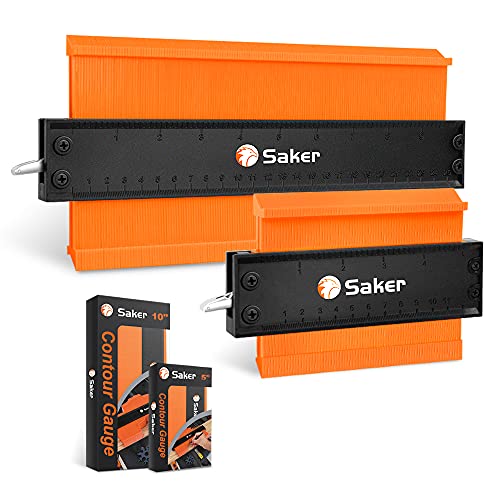
Two gauges in two lengths to press against baseboard trim, copper supply lines, or wheel arches and transfer the line to your stock.
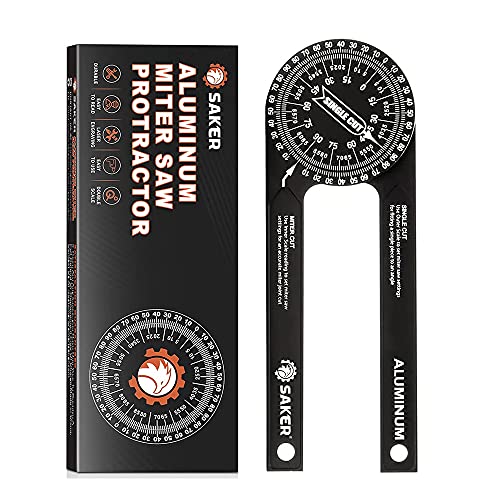
An aluminum dial that takes the guesswork out of trim cuts by reading corner angles and showing the exact miter saw setting.
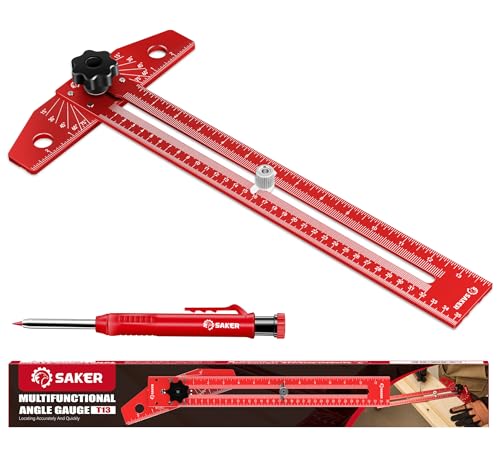
An aluminum rule and protractor head that locks down with a thumb nut for laying out lines, finding angles, and setting saw bevels across the bench.
Push the teeth against the baseboard or pipe, throw the clamp, and trace the curve straight onto your board.