 SAKER
SAKER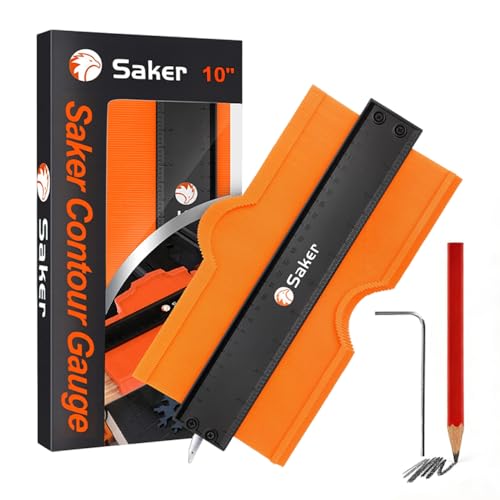
Contour Gauge 10-Inch with Lock
A row of flat plastic teeth that presses against door casings, pipe curves, and uneven baseboards to lock the profile for a pencil trace.
$19.994.6 out of 5 22,735 ratings
Cabinet pulls and shelf brackets usually go wrong on the fourth hole, not the first. We mill this ruler from aluminum alloy so the edge stays straight when you slide it along a face frame. Three adjustable stop blocks lock your spacing down, while two built-in bubble vials show you plumb and level on the workpiece.
Price and stock live with the storefront and can move between visits.
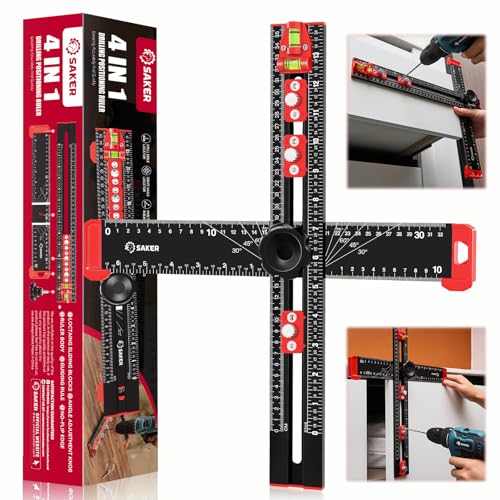
Slide the three stops along the aluminum bar to set your hole pattern once. Tighten the knobs and move from door to door, repeating the same layout without laying a tape measure across the wood each time.
Two level vials sit right in the body for checking vertical and horizontal alignment together. You can verify your line against an uneven wall or a crooked cabinet run before you bring the drill bit to the surface.
We machine the ruler from aluminum alloy to keep it flat against the board. The printed graduations resist rubbing off when the tool spends the afternoon sliding across rough plywood, painted trim, or saw dust on the bench.
Large plastic knobs loosen and grip without needing a hex key from your drawer. You can reset the span, alter the angle, or pull a block off the rail entirely when a narrow drawer face needs only one guide.
| Tool shelf | Measuring and marking |
|---|---|
| Where it works | At the workbench, Around the house |
| Size | 4 in |
| Functions | 4-in-1 |
Payment, delivery and returns run at the storefront, under its own rules.
A row of flat plastic teeth that presses against door casings, pipe curves, and uneven baseboards to lock the profile for a pencil trace.
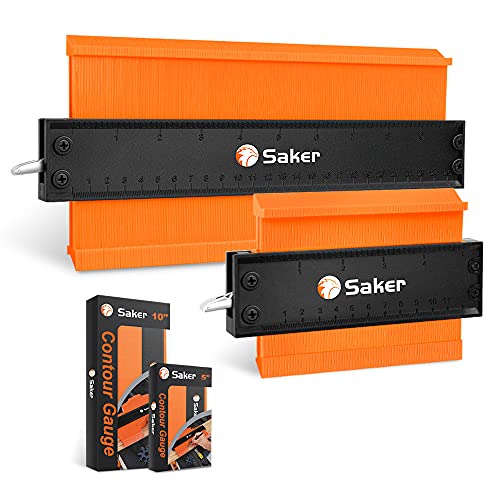
Two gauges in two lengths to press against baseboard trim, copper supply lines, or wheel arches and transfer the line to your stock.
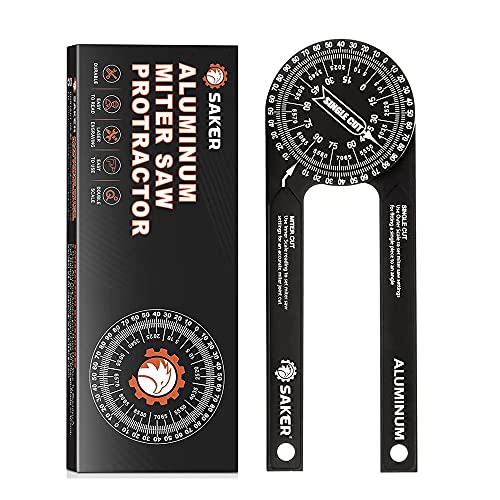
An aluminum dial that takes the guesswork out of trim cuts by reading corner angles and showing the exact miter saw setting.
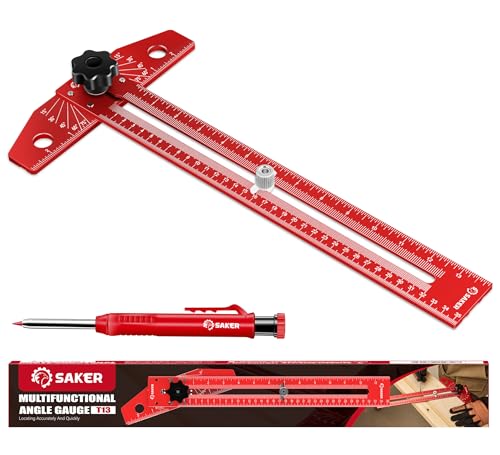
An aluminum rule and protractor head that locks down with a thumb nut for laying out lines, finding angles, and setting saw bevels across the bench.
Line up repeated drill holes and check level on cabinet faces without measuring each bore by hand from scratch.