 SAKER
SAKER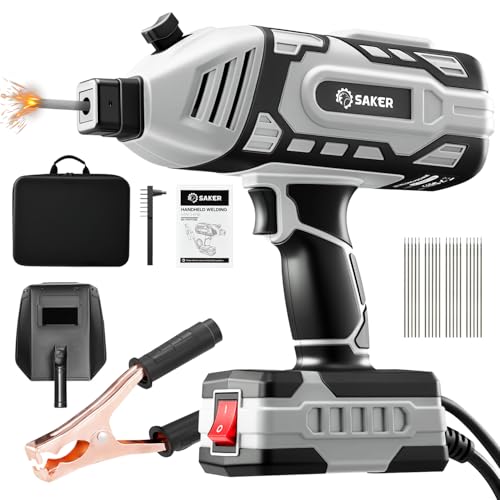
Portable ARC Welder with Welding Gun, Grey
A handheld stick welder with a built-in gun grip and dial adjustment for quick farm gate repairs and bench work.
$99.994.3 out of 5 931 ratings
What a 110V inverter and a box of E6013 will and will not do in a home garage, and how to keep the breaker out of it.
Our portable welder runs off a 110V outlet and puts out 20 to 120 amps on a five position knob. The bottom of that range is thin sheet, the middle is where most home repairs sit, and the top is for thicker stock in short bursts.
The 120 figure is the ceiling of the machine, not a setting to live at. A standard household circuit has its own limit, and long beads near the top of the range are the fastest way to meet the breaker. If the lights dim when the arc strikes, the wall is telling you to come down a step or run a shorter bead.
The rods we stock are E6013 in 3/32 inch, and that choice is deliberate. They light easily, run on both AC and DC, work in any position, and forgive a joint that does not fit as tightly as it should. The slag lifts off cleanly instead of fighting you.
Their shallow penetration is usually listed as a limitation and for a beginner it is closer to a feature. Shallow means less chance of blowing a hole through thin material, which is most of what a garage actually welds. Gate hinges, brackets, trailer fittings, a cracked mower deck.
The machine weighs about 3.3 lb and measures roughly 9.8 by 9.45 inches, which changes where welding happens. It is not a station in the corner of the garage that work has to be carried to. It goes to the gate, the trailer, the fence post, on the end of an extension cord.
That is the real argument for an inverter this size in a home shop. Most jobs that need welding are attached to something too heavy or too fixed to bring inside, and a machine you can carry in one hand with the rods in the other pocket gets used.
The 1 pound box looks like the sensible first purchase and usually is not. A pound of 3/32 rod goes quickly once you start practicing, and practice is most of what the first month should be. Beads on scrap, then beads on scrap again.
The 5 pound box costs less than twice the small one and lasts long enough to get past the awkward stage. Keep it dry, because damp flux runs badly and the fault looks like technique. A closed box on a shelf, not an open one on the floor of a garage.
A welder drawing near its ceiling through a thin fifty foot cord is a different machine from the same welder plugged into the wall. Voltage drops over the run, the arc goes unsteady, and the cord itself gets warm. People blame the welder for what the cord is doing.
If the job needs an extension, use the shortest and thickest one you own, uncoil it fully rather than working off the reel, and put your hand on it partway through the first bead. A cord that is noticeably warm is a cord that is too small for what you are asking.
Stick welding tolerates a lot, but it does not tolerate paint, rust and mill scale. The arc has to reach steel, and a rod dragged across a painted gate spits, wanders and leaves a bead sitting on top of the surface rather than joined into it. A wire brush or a flap disc first is not optional work, it is the job.
The same goes for where the ground clamp lands. Clamped onto a rusty trailer frame six feet from the joint, the current has to find its own way through every bolted connection in between. Clamp it to bare metal as close to the weld as you can reach, and half of the problems people describe as a bad arc disappear.
One piece per family off the shelves this note covers, read from the catalog on 2026-09-10.
A handheld stick welder with a built-in gun grip and dial adjustment for quick farm gate repairs and bench work.
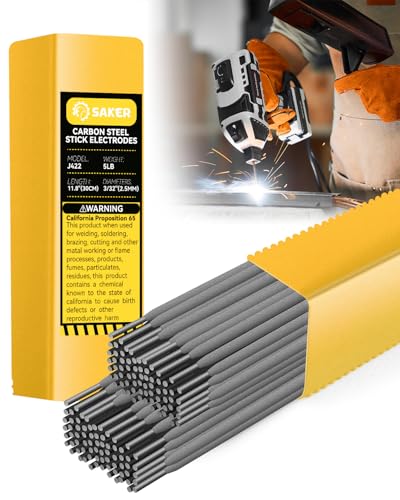
These general mild steel electrodes strike easily on smaller home welders and leave a smooth bead across awkward joints.
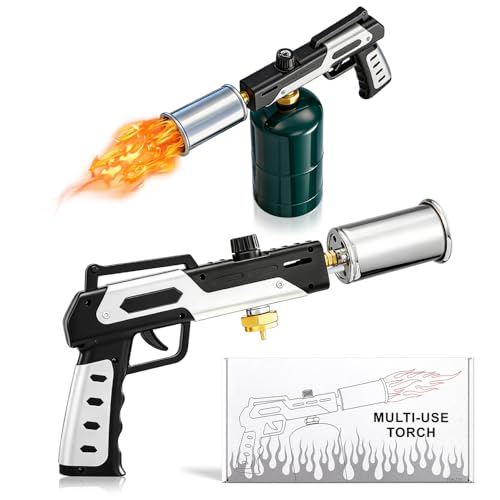
Thread this torch head onto a small gas cylinder to start the charcoal stack, sear meat on the grill, or heat frozen garden soil without matches.
The bar length on our mini chainsaw is not the limb thickness it handles. Here is where the line really falls, and what happens past it.
One number sets how hard a tool pulls, the other sets how long. Also the part most brands skip: our packs are not one family.
The tool that turns a door casing into a pencil line. How to press it, when to lock it, and which length to reach for.