 SAKER
SAKER
Mini Chainsaw with Two Batteries
A small cordless saw for fence rows, fallen limbs, and the dead wood you can reach without climbing a ladder.
$51.074.5 out of 5 6,657 ratings
One number sets how hard a tool pulls, the other sets how long. Also the part most brands skip: our packs are not one family.
Voltage is pressure. It sets how hard the motor can pull when the work fights back, which is why a saw binding in green wood cares about volts and a light does not. Amp hours are the size of the tank. They set how long the tool runs before the pack is empty, and they do nothing at all for grunt.
So the two figures answer different questions. Higher volts, harder pull. Higher amp hours, longer session. A 20V 1500mAh pack and a 12V 2000mAh pack are not ranked against each other, they are shaped for different tools.
Our cordless line does not run on one battery family. The mini chainsaw takes 20V. The car polisher takes 12V. The tile vibration tool takes 22V. The grease gun ships with its own pair of 2.0Ah packs. None of those slide into each other.
Plenty of catalogs let a buyer assume otherwise and sort it out after the box is open. We would rather write it here. Every cordless tool on this site is a self contained purchase, charger included, and buying a second one does not inherit anything from the first.
Some of our kits ship with a second battery, and it is worth understanding what that actually buys. It is not more power. It is the ability to keep working while the first pack sits on the charger, which only matters if your job is longer than one charge.
Pruning a hedge, detailing a whole car, laying a floor: those run past a single pack, and the spare is the difference between an afternoon and two afternoons. Cutting one fallen branch does not. Buy the second pack for the job you actually have.
Lithium packs age worst sitting still and empty. A tool put away flat in November and picked up in April has spent five months at the bottom of its range, and that is the storage habit that shortens a battery more than any amount of cutting.
Our own rule is dull and it works. Charge it after the job, not before the next one, and if a tool is going into winter storage, give it a top up first. A pack that lives on a shelf near half full will still be usable when you want it.
A battery that ran a whole hedge in September can quit halfway through the same hedge in January, and the pack has not gone wrong. Chemistry slows down when it is cold, so the tool sees less push and the charge indicator drops faster than the actual state of the cell.
Two things help and neither costs anything. Keep packs indoors rather than in an unheated garage, and carry the spare in a coat pocket rather than the tool case. A pack that starts the job at room temperature behaves like itself for most of it.
We sell both and we are not going to pretend the cordless one is always the answer. Anything that runs continuously for an hour, sits in one spot, and lives near an outlet is a corded job. The pack in that situation is a limitation with a charger attached.
Cordless earns its price where the cord is the actual problem. Up a ladder, under a car, at the far end of a yard, on a gate with no power within reach. That is the honest dividing line, and it has nothing to do with which tool is newer.
One piece per family off the shelves this note covers, read from the catalog on 2026-09-10.
A small cordless saw for fence rows, fallen limbs, and the dead wood you can reach without climbing a ladder.
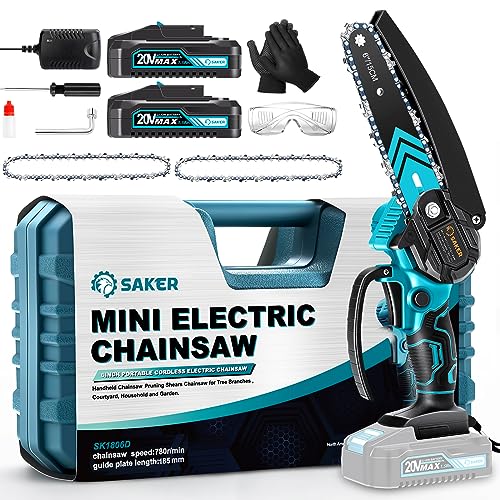
A handheld cordless saw with a quenched chain and two batteries for clearing storm debris, pruning branches, and bucking small firewood.
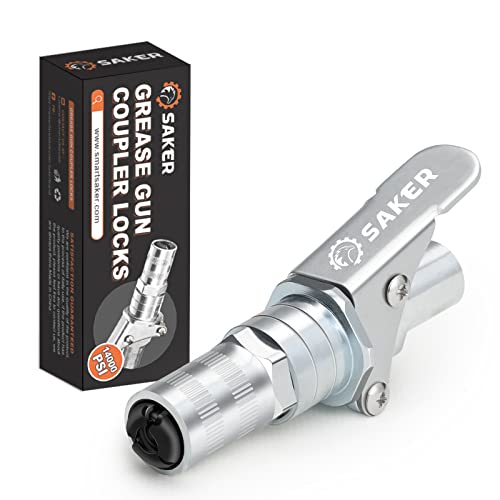
Thread our locking coupler adapter onto your grease gun hose to clip securely onto stubborn zerk fittings without holding the tip.
The bar length on our mini chainsaw is not the limb thickness it handles. Here is where the line really falls, and what happens past it.
The tool that turns a door casing into a pencil line. How to press it, when to lock it, and which length to reach for.
A dull chain makes dust instead of chips and asks you to push. What the angles mean, and why touching up beats grinding.